.png)
Summary
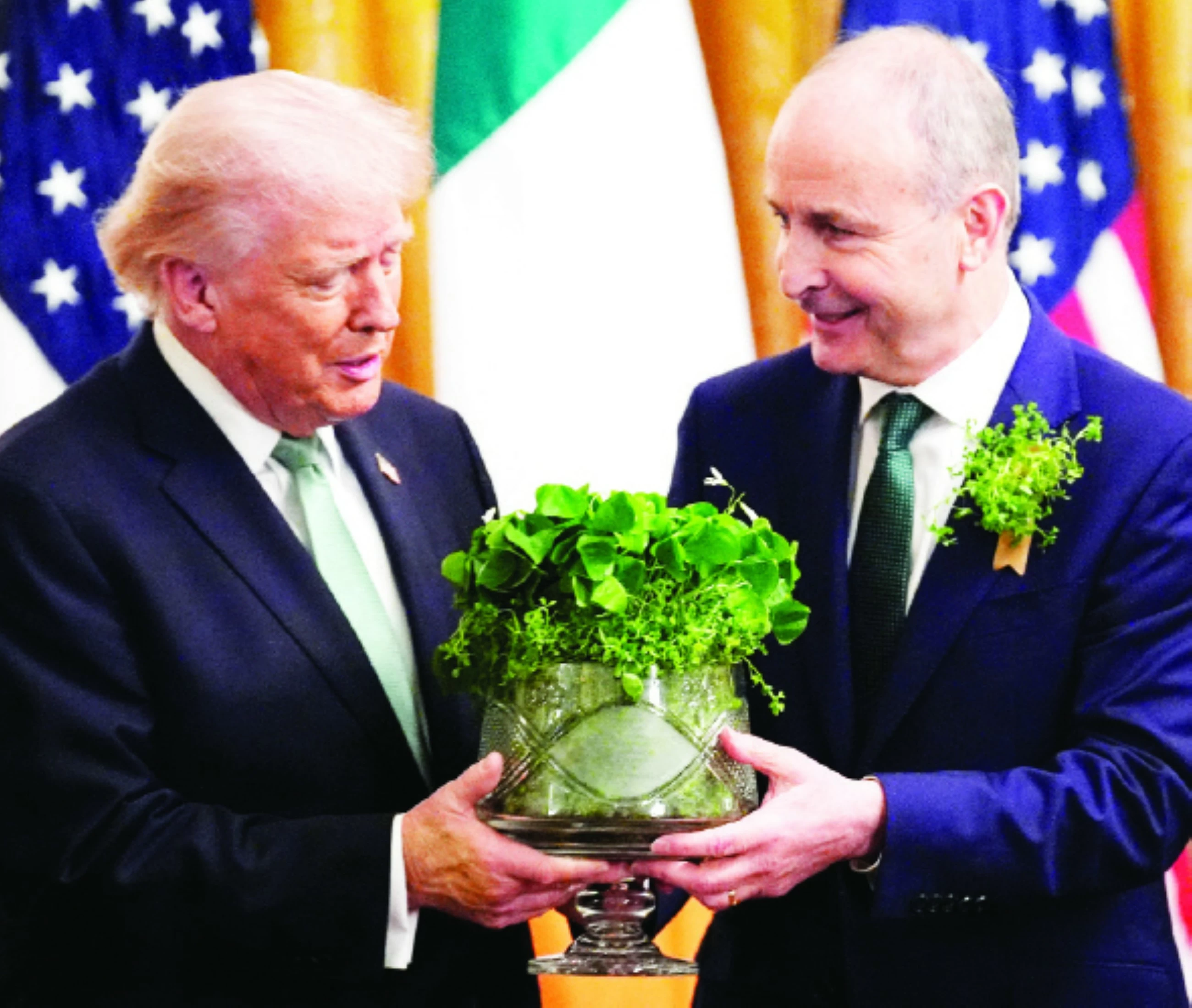
Irish Prime Minister Micheal Martin recently met with US President Donald Trump at the White House for the traditional St. Patrick’s Day visit. The meeting turned tense as President Trump pressured Ireland to support the ongoing war involving the United States, Israel, and Iran. Despite Ireland’s long-standing policy of neutrality, Trump criticized the nation and its leaders for not joining the military effort. This disagreement highlights a deep divide between the US administration and European leaders regarding Middle East policy and international law.
Main Impact
The primary impact of this meeting is the visible strain on the relationship between the United States and its European partners. President Trump’s demand for military support marks a shift in how the US interacts with neutral nations like Ireland. By threatening to "remember" those who do not help, the US administration is signaling that future diplomatic and economic cooperation may depend on military loyalty. This puts Ireland in a difficult position as it tries to balance its friendship with the US against its commitment to international law and its own history.
Key Details
What Happened
During the one-hour meeting, President Trump expressed frustration that European nations have not joined the US-Israeli military campaign against Iran. He compared the situation to the war in Ukraine, noting that the US supported Europe when Russia invaded. Trump used harsh language to describe Iranian leaders and criticized Irish President Catherine Connolly. Connolly had previously stated that the war against Iran violates international law and supported legal action against Israel at the International Court of Justice.
Important Numbers and Facts
Ireland has a unique diplomatic history with the region. It did not officially recognize Israel until 1963, which was 25 years after Israel was founded. In 1974, Ireland became one of the first Western nations to recognize the Palestine Liberation Organization (PLO). More recently, in 2021, Ireland became the first European Union member to formally declare that Israeli settlements in the West Bank are a form of "de facto annexation," meaning the land is being taken over in practice even if not by official law.
Background and Context
Ireland’s perspective on the Middle East is shaped by its own history of being ruled by Britain for 800 years. Many Irish people see a connection between their past and the current situation in Palestine. In the past, Ireland dealt with land being taken away, foreign settlers moving in, and widespread poverty. These experiences led millions of Irish people to leave their homes and move to places like the United States.
During the meeting, a small statue of Winston Churchill in the room sparked a historical debate. When Trump compared UK Prime Minister Keir Starmer unfavorably to Churchill, Micheal Martin reminded him of Churchill’s controversial role in Ireland. Churchill was responsible for sending a brutal police force known as the "Black and Tans" to fight Irish independence seekers. This reminder served to show that historical figures seen as heroes in one country are often seen very differently in another.
Public or Industry Reaction
The reaction to the meeting shows a clear split in priorities. President Trump focused on military alliances and personal loyalty, even mentioning that he holds grudges against those who do not support him. On the other hand, Micheal Martin defended the UK Prime Minister and stood by Ireland’s legal and moral positions. European leaders generally remain cautious about entering a new war in the Middle East, especially one that many legal experts believe lacks a clear mandate under international rules.
What This Means Going Forward
Moving forward, Ireland is unlikely to abandon its neutral stance or its support for Palestinian rights. The Irish government views these positions as part of its national identity and its duty to uphold global justice. However, the "we will remember" warning from the US President suggests that Ireland might face diplomatic pressure in other areas, such as trade or investment. The tension between following international law and maintaining a strong relationship with a powerful ally like the US will likely continue to be a major challenge for Irish leaders.
Final Take
The meeting between Micheal Martin and Donald Trump was more than just a holiday visit; it was a clash of two different worldviews. While the US seeks to build a military coalition, Ireland remains focused on historical lessons and legal principles. This interaction proves that even long-time friends can have serious disagreements when military force and international law are at stake. The strength of the Irish-US bond will be tested as both nations navigate a very unstable global environment.
Frequently Asked Questions
Why is Ireland neutral?
Ireland has a policy of military neutrality, which means it does not join military alliances like NATO. This policy allows Ireland to focus on peacekeeping and international law rather than taking sides in global conflicts.
What was the disagreement about Winston Churchill?
President Trump praised Churchill as a strong leader, but Micheal Martin reminded him that Churchill sent a violent force to Ireland to stop their fight for independence. This highlighted how different countries remember history in different ways.
Why does Ireland support Palestine?
Ireland’s support is largely based on its own history of being a colony. Many Irish people feel a sense of shared experience with Palestinians regarding land loss and the struggle for self-determination.