.png)
Summary
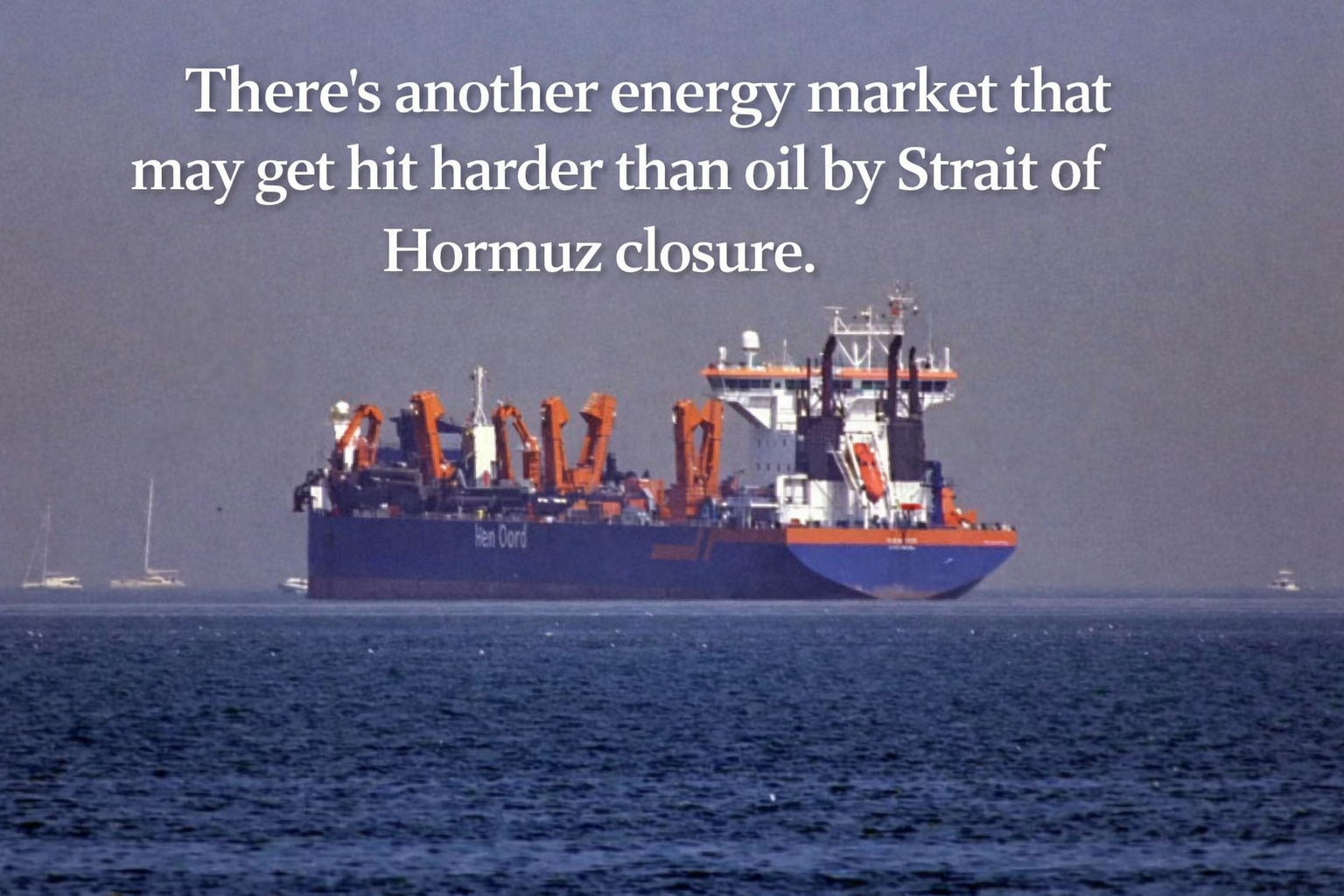
The Strait of Hormuz is one of the most important shipping routes in the world. While most people focus on how a closure would affect oil prices, experts warn that the liquefied natural gas (LNG) market could face an even bigger crisis. About 20% of the world's total LNG supply moves through this narrow waterway every day. If trade stops here, the global energy supply would face a massive shock that could lead to record-high prices for heating and electricity.
Main Impact
A disruption in the Strait of Hormuz would immediately cut off major energy supplies to Europe and Asia. The impact on the gas market might be more severe than the impact on oil because gas is harder to replace quickly. Many countries have strategic oil reserves that can last for months, but natural gas storage is often more limited. Without a steady flow of LNG ships, power plants in many parts of the world would struggle to keep the lights on.
Key Details
What Happened
Recent tensions in the Middle East have raised concerns about the safety of shipping lanes. The Strait of Hormuz is a small but vital passage that connects the Persian Gulf with the rest of the world. Because it is so narrow, any conflict in the area could easily block ships from passing through. This has put energy analysts on high alert, as they track the movement of giant tankers carrying super-cooled gas to international markets.
The Strait of Hormuz is a critical shipping route. While oil is a major concern, the LNG market faces a higher risk. 20% of global LNG supply passes through daily. A closure would cause record-high heating and electricity prices.
| Feature | Oil Market | LNG Market |
|---|---|---|
| Supply Volume | Significant global flow | 20% of total global supply |
| Replacement | Easier to source elsewhere | Extremely difficult to replace |
| Reserves | Strategic reserves available | Very limited storage capacity |
| Impact | Price spikes at pump | Electricity & heating crisis |
- • Immediate cutoff to major energy supplies in Europe and Asia.
- • Power plants would struggle to maintain electricity grids.
- • Disruption driven by recent tensions in the Middle East.
Important Numbers and Facts
The data shows just how much the world relies on this single point of transit. Roughly 20% of all global LNG trade passes through the Strait. Qatar, which is one of the top three LNG exporters in the world, sends almost all of its shipments through this route. Other countries like the United Arab Emirates and Kuwait also rely on this passage for their energy exports and imports. If these shipments stop, millions of tons of gas would be removed from the global market instantly.
Background and Context
To understand why this matters, it helps to know what LNG is. Natural gas is turned into a liquid by cooling it to very low temperatures. This makes it easier to ship across oceans in large tankers. Over the last decade, the world has moved away from coal and toward natural gas to produce electricity. This shift has made LNG a critical part of the global economy. The Strait of Hormuz is a "chokepoint," meaning it is a narrow place where traffic can be easily blocked. At its thinnest point, the shipping lanes are only a few miles wide.
Public or Industry Reaction
Energy experts and market traders are watching the situation closely. When tensions rise in the region, the price of natural gas often jumps because traders fear a supply shortage. Governments in Asia, particularly in Japan and South Korea, are especially worried because they have very few natural resources of their own. They rely heavily on Qatari gas to run their factories and heat their homes. In Europe, the concern is also high as they have been trying to find new gas sources to replace supplies they used to get from Russia.
What This Means Going Forward
If the Strait were to close, the world would have to look for gas from other places like the United States or Australia. However, these countries are already producing as much as they can. Building new facilities to export more gas takes years and costs billions of dollars. In the short term, a closure would likely lead to "demand destruction." This is a fancy way of saying that prices would become so high that people and businesses would simply have to stop using as much energy, which could lead to an economic slowdown.
Final Take
The global energy system is much more fragile than many people realize. While oil often gets the most attention during times of war or political trouble, the world's growing reliance on natural gas has created a new vulnerability. The Strait of Hormuz is the heartbeat of the global LNG trade. If that heartbeat skips a beat, the economic consequences will be felt in every corner of the globe, from small households to the largest industrial factories.
Frequently Asked Questions
Why is the Strait of Hormuz so important for gas?
It is the only way for ships to leave the Persian Gulf. Since major gas producers like Qatar are located there, about one-fifth of the world's liquid gas must pass through this small area to reach customers.
Can't we just use pipelines instead?
Most of the gas from this region is sent to distant countries in Asia and Europe. There are no pipelines long enough or large enough to carry this much gas across oceans, so ships are the only option.
How would a closure affect regular people?
If the supply of gas drops, the price goes up. This usually leads to higher monthly utility bills for heating and cooling homes. It can also make the price of goods go up because factories have to pay more for power.