.png)
Summary
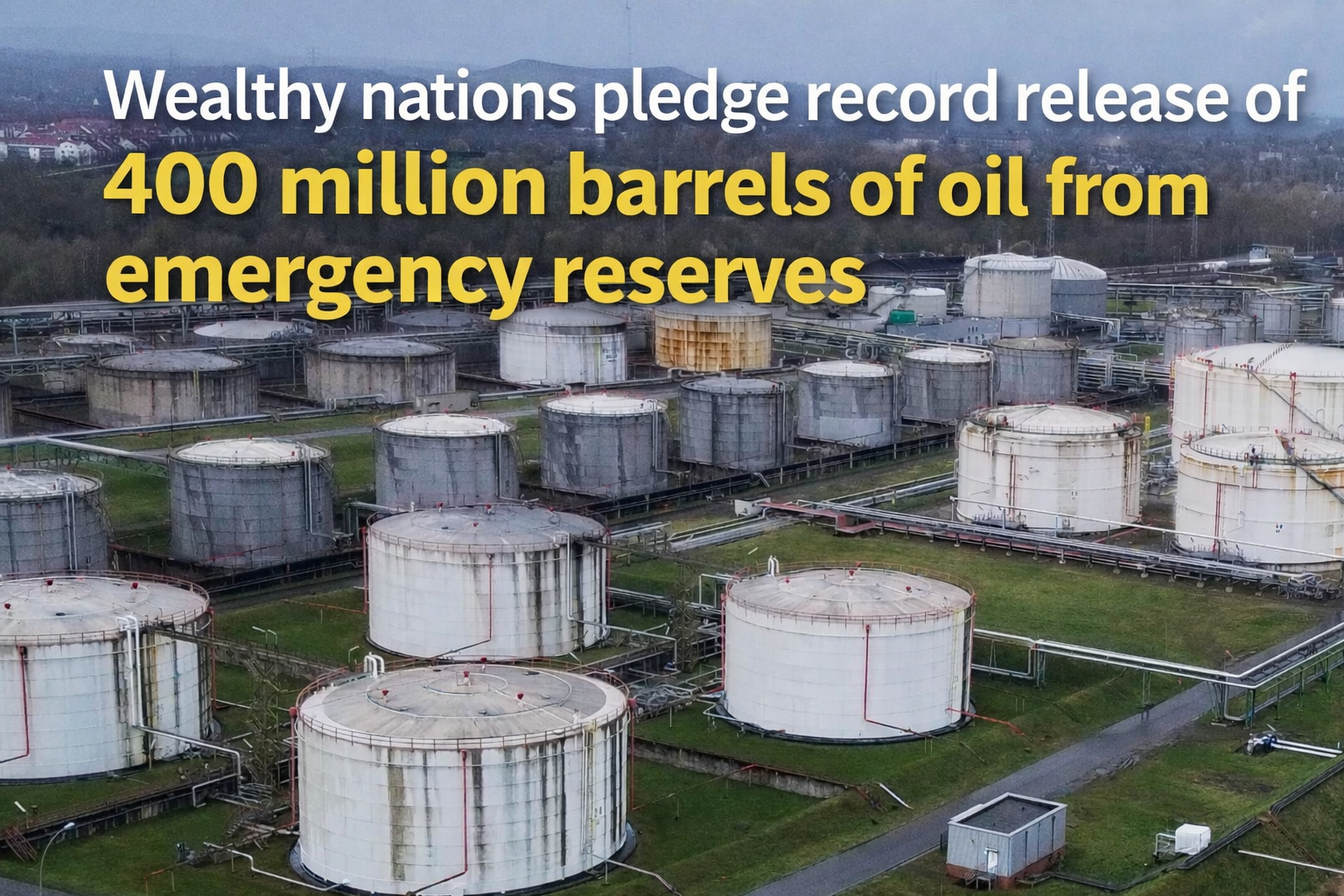
A group of the world’s wealthiest nations has agreed to release a record-breaking 400 million barrels of oil from their emergency stockpiles. This decision comes as a direct response to the ongoing war in Iran and the complete shutdown of shipping through the Strait of Hormuz. The move is designed to stabilize global energy markets and prevent a massive spike in fuel prices. It represents the largest emergency oil release in history, showing how serious the current energy crisis has become.
Main Impact
The primary goal of this massive oil release is to fill the gap left by missing supplies from the Middle East. Because the Strait of Hormuz is blocked, a huge portion of the world's oil cannot reach the people who need it. This shortage has caused fears of a global economic slowdown. By putting 400 million barrels into the market, these nations hope to keep factories running, trucks moving, and heating costs manageable for families. However, experts warn that while this helps in the short term, it does not solve the underlying problem of the blocked shipping routes.
Key Details
What Happened
The International Energy Agency (IEA), which is based in Paris, announced the plan on Wednesday. The group includes 32 member countries, including major economies like the United States, Japan, and Germany. The decision follows weeks of rising tension in the Arabian Gulf. Iran has been carrying out attacks on commercial ships and oil refineries in the region. These attacks are a response to military strikes by the U.S. and Israel. As a result, almost all cargo traffic through the Strait of Hormuz has stopped, leaving the world with a major energy deficit.
| Category | Current Crisis | Emergency Action |
|---|---|---|
| Trigger | War in Iran & Strait of Hormuz shutdown | Coordinated stockpile release |
| Volume | Massive global supply deficit | 400 million barrels (Record high) |
| Market Goal | Prevent fuel price spikes | Stabilize energy markets |
| Economic Focus | Risk of global slowdown | Maintain factory & transport operations |
- Largest emergency oil release in history.
- Direct response to Middle East shipping blockades.
- Aims to lower heating and transport costs for families.
- Designed to prevent industrial shutdowns.
Important Numbers and Facts
The scale of this action is much larger than anything seen before. To understand the size, consider these facts:
- 400 Million Barrels: This is the total amount of oil being released from emergency reserves.
- Double the Previous Record: In 2022, the IEA released 182.7 million barrels after the invasion of Ukraine. This new release is more than twice that size.
- 20% Supply Drop: The IEA reports that the total global energy supply has fallen by about 20% due to the conflict.
- 10% Export Levels: Currently, the amount of oil being exported from the affected region is less than 10% of what it was before the war started.
- One-Fifth of World Oil: About 20% of all the oil used globally usually passes through the narrow Strait of Hormuz.
Key Aspect Details Release Volume 400 million barrels (Record-breaking) Primary Cause War in Iran and Strait of Hormuz shutdown Market Goal Stabilize energy markets and prevent price spikes Economic Focus Maintain factory output and transport logistics Consumer Impact Manage heating costs and fuel prices for families Risk Level High; response to critical supply shortage 
-
Global Response to the Energy Crisis
Wealthy nations are taking unprecedented action to protect the global economy. They have agreed to release 400 million barrels of oil from emergency reserves—the largest release in history. This decision follows the closure of the Strait of Hormuz due to the conflict in Iran, which has cut off a vital supply of the world's energy.
Why This Matters
The goal is to bridge the gap left by missing Middle Eastern oil and prevent fuel prices from spiraling out of control. By injecting this supply into the market, leaders hope to achieve several key objectives:
- Keep factories and businesses operational
- Ensure trucks can continue delivering essential goods
- Help families afford heating and transportation
- Avoid a major global economic downturn
While this provides immediate relief, experts are closely watching how long the supply disruption will last and what it means for long-term stability.
Background and Context
The Strait of Hormuz is a small but vital waterway that connects the Arabian Gulf to the Indian Ocean. It is often called a "choke point" because it is so narrow and so much oil passes through it. When this path is blocked, the global supply of energy is immediately threatened. Iran has used its military power to target ships and oil facilities in neighboring Gulf countries. Their goal is to cause enough economic trouble for the rest of the world that the U.S. and Israel will feel pressured to stop their military actions. This strategy has effectively cut off the flow of oil and natural gas to major markets in Europe and Asia.
Public or Industry Reaction
Fatih Birol, the head of the IEA, stated that this is a "major action" meant to help the market right away. He was honest about the limits of this plan, saying that the only way to truly fix the situation is for ships to start moving through the Strait of Hormuz again. Before the IEA made its announcement, energy ministers from the Group of Seven (G7) met in Paris. These leaders from Canada, France, Italy, Japan, Britain, Germany, and the U.S. spent time looking for ways to lower energy prices for their citizens. Industry experts agree that while the 400 million barrels will help, the world cannot rely on emergency reserves forever.
What This Means Going Forward
The release of these reserves will provide some breathing room for the global economy, but the future remains uncertain. Natural gas markets are also in a very difficult spot, especially in Asia, where many countries rely heavily on imports. If the war continues and the Strait remains closed, even these record-breaking reserves will eventually run low. The next steps will likely involve more diplomatic efforts to secure the shipping lanes. Governments may also look for ways to speed up the use of other energy sources to reduce their dependence on oil from the Middle East. For now, the focus is on preventing a total energy collapse.
Final Take
This record-breaking release of oil shows that the world's leading economies are willing to take extreme steps to protect the global market. It is a bold move to stop a massive price spike, but it is only a temporary fix. The real solution depends on ending the conflict and reopening the world's most important oil route. Until that happens, energy security will remain a top concern for every nation.
Frequently Asked Questions
Why is the oil being released now?
The oil is being released because the war in Iran and attacks on shipping have blocked the Strait of Hormuz. This has cut off a huge portion of the world's oil supply, causing prices to rise and creating a shortage.
How much oil is 400 million barrels?
It is the largest amount ever released from emergency reserves. It is more than double the amount released during the energy crisis caused by the war in Ukraine in 2022.
Will this make gas prices go down?
The goal is to stabilize prices and prevent them from rising even higher. While it adds more supply to the market, the final price at the pump will still depend on how long the shipping routes remain blocked.