.png)
Summary
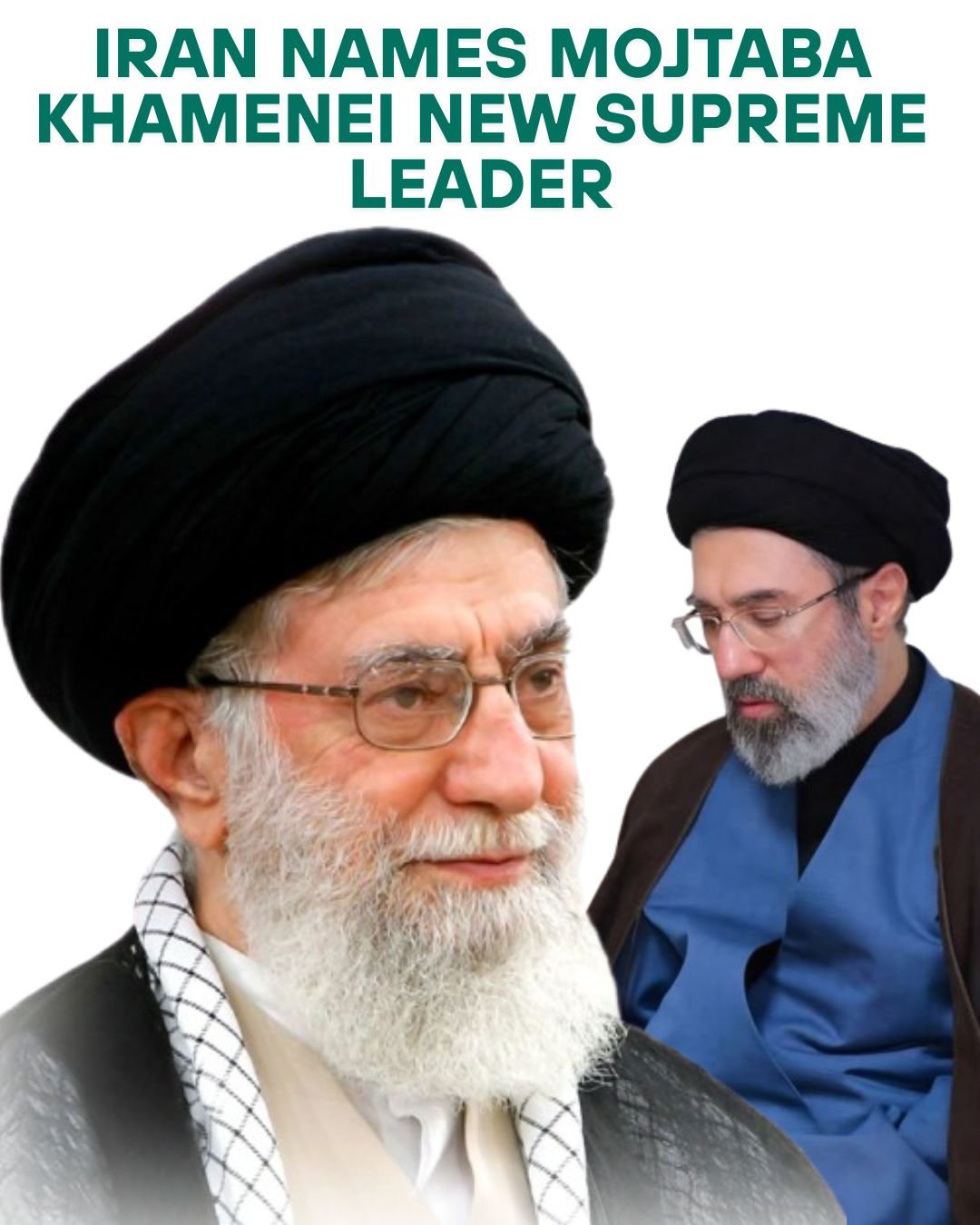
Iran has officially named Mojtaba Khamenei as its new Supreme Leader. This decision comes only nine days after his father, Ayatollah Ali Khamenei, was killed in military strikes by the United States and Israel. The move shows that Iran’s ruling group is determined to keep power within the family despite the ongoing war and heavy pressure from foreign leaders.
Main Impact
The appointment of the 56-year-old Mojtaba Khamenei ensures that the country’s leadership remains in the hands of a hardline conservative. This choice is a direct challenge to the United States and Israel, who have both spoken out against him. By picking a leader with strong ties to the military, Iran is signaling that it will continue its current path of resistance rather than seeking a new direction or making peace with its enemies.
Key Details
What Happened
The Assembly of Experts, the group of clerics responsible for choosing Iran's top leader, met on Sunday to make their decision. They voted decisively to appoint Mojtaba Khamenei as the third Supreme Leader in the history of the Islamic Republic. The group stated they did not hesitate to make the choice, even as the country faced air strikes and rising tensions across the Middle East.
Important Numbers and Facts
The transition of power is happening during a period of extreme violence. In the last nine days, the conflict has spread across several countries. Iran’s health ministry reports that at least 1,200 civilians have been killed and 10,000 others have been wounded. In Lebanon, health officials say nearly 400 people have died in recent air strikes, including many women and children. On the military side, Iran’s Revolutionary Guards claim they have enough supplies to keep fighting with drones and missiles for at least six months.
Background and Context
The Supreme Leader is the most powerful person in Iran. He has the final say on all major government decisions, including military actions and foreign policy. For many years, people wondered who would follow Ali Khamenei. The death of the elder Khamenei in a recent strike created a sudden power gap. By choosing his son, the government hopes to maintain order and show the world that the system is still strong. However, this is the first time power has passed from father to son in the current system, which some critics say goes against the original goals of the country's revolution.
Public or Industry Reaction
The international response has been sharp. US President Donald Trump called the new leader a "lightweight" and suggested that the United States should have a say in who leads Iran. He warned that without US approval, the new leader might not stay in power for long. In response, Iran’s Foreign Minister, Abbas Araghchi, said the choice was for Iran alone to make. He told reporters that no other country would be allowed to interfere in their internal affairs.
Inside Iran, the mood is heavy. In the capital city of Tehran, Israeli strikes on oil facilities have caused massive fires. The smoke has made the air toxic and hard to breathe. Many residents are staying indoors, and there are reports of fuel shortages at gas stations. While some people initially hoped for change after the old leader's death, the reality of the war and the lack of basic supplies like gasoline have made life very difficult for ordinary citizens.
What This Means Going Forward
The war appears to be entering a more dangerous phase. Iran has warned that it will soon start using its most advanced long-range missiles. These weapons have not been used much in the past and could cause more damage in the region. At the same time, the conflict is affecting neighboring countries. Recent attacks have hit targets in Saudi Arabia, Kuwait, and Bahrain, damaging fuel tanks and water plants. There is currently no clear plan for a ceasefire. While some world leaders, including the Pope, have called for an end to the bombing and the start of talks, both sides seem prepared to keep fighting for weeks or even months.
Final Take
The naming of Mojtaba Khamenei is a bold move by Iran’s ruling clerics to protect their system during a time of war. While it provides a quick answer to the question of who is in charge, it does little to stop the violence or fix the country's struggling economy. The new leader faces a massive challenge as he takes over a nation under fire, with no easy way to end the conflict with the West.
Frequently Asked Questions
Who is the new leader of Iran?
The new leader is Mojtaba Khamenei, the 56-year-old son of the previous Supreme Leader, Ayatollah Ali Khamenei.
Why is there a war in the region?
The current war intensified after US and Israeli strikes killed the previous Iranian leader nine days ago, leading to a series of attacks and counter-attacks across the Middle East.
How is the war affecting daily life in Tehran?
Residents are dealing with toxic smoke from bombed oil sites, fuel shortages at gas stations, and the constant threat of air strikes, making it difficult to perform daily tasks like shopping.