.png)
Summary
Israeli air strikes in Lebanon have killed eight members of the Hezbollah group, leading to new threats of continued fighting in the region. The attacks hit several targets in the eastern and southern parts of the country, including command centers and a refugee camp. Hezbollah leaders responded by saying they have no choice but to keep up their resistance against Israel. This surge in violence happens as the Lebanese government is trying to move forward with a plan to disarm the group.
Main Impact
The primary impact of these strikes is a sharp increase in the risk of a wider war between Israel and Hezbollah. By hitting high-level meetings and missile command centers, Israel has shown its ability to strike deep into Lebanese territory. However, these actions have also strengthened Hezbollah's resolve to fight back rather than surrender their weapons. This makes it much harder for the Lebanese national army to take control of the country's security, as the group now claims that armed resistance is their only way to defend the nation.
Key Details
What Happened
On Friday, the Israeli military launched a series of air raids across Lebanon. The military stated that it targeted Hezbollah command centers in the eastern part of the country and targets linked to the group Hamas in the south. One of the most significant strikes hit a building in the Bekaa region where Hezbollah members were reportedly holding a meeting. Another strike occurred at the largest Palestinian refugee camp in southern Lebanon, which resulted in further casualties. Local reports showed heavy damage to buildings in residential areas, requiring emergency teams to use heavy machinery to clear the debris.
Important Numbers and Facts
The Lebanese health ministry reported that a total of 12 people were killed in the attacks. Ten of these deaths occurred in eastern Lebanon, while two people died in the south. Hezbollah later confirmed that eight of its operatives were among the dead. The Israeli military claimed the targets in the Baalbek area were part of Hezbollah's missile operations. These strikes took place just as the Lebanese government was preparing to start the second phase of a plan to disarm armed groups in the southern part of the country.
Background and Context
Hezbollah is a powerful political and military group in Lebanon that is supported by Iran. It has been in a long-standing conflict with Israel, often trading fire across the border. The situation is complicated by the fact that the Lebanese government and its president, Joseph Aoun, are trying to establish more authority over their own land. They want the national army to be the only armed force in the south. At the same time, there are growing tensions between the United States and Iran. President Donald Trump has recently warned of possible military action against Iran due to its nuclear program. Because Iran supports groups like Hezbollah and Hamas, these local strikes in Lebanon are often seen as part of a much larger regional power struggle.
Public or Industry Reaction
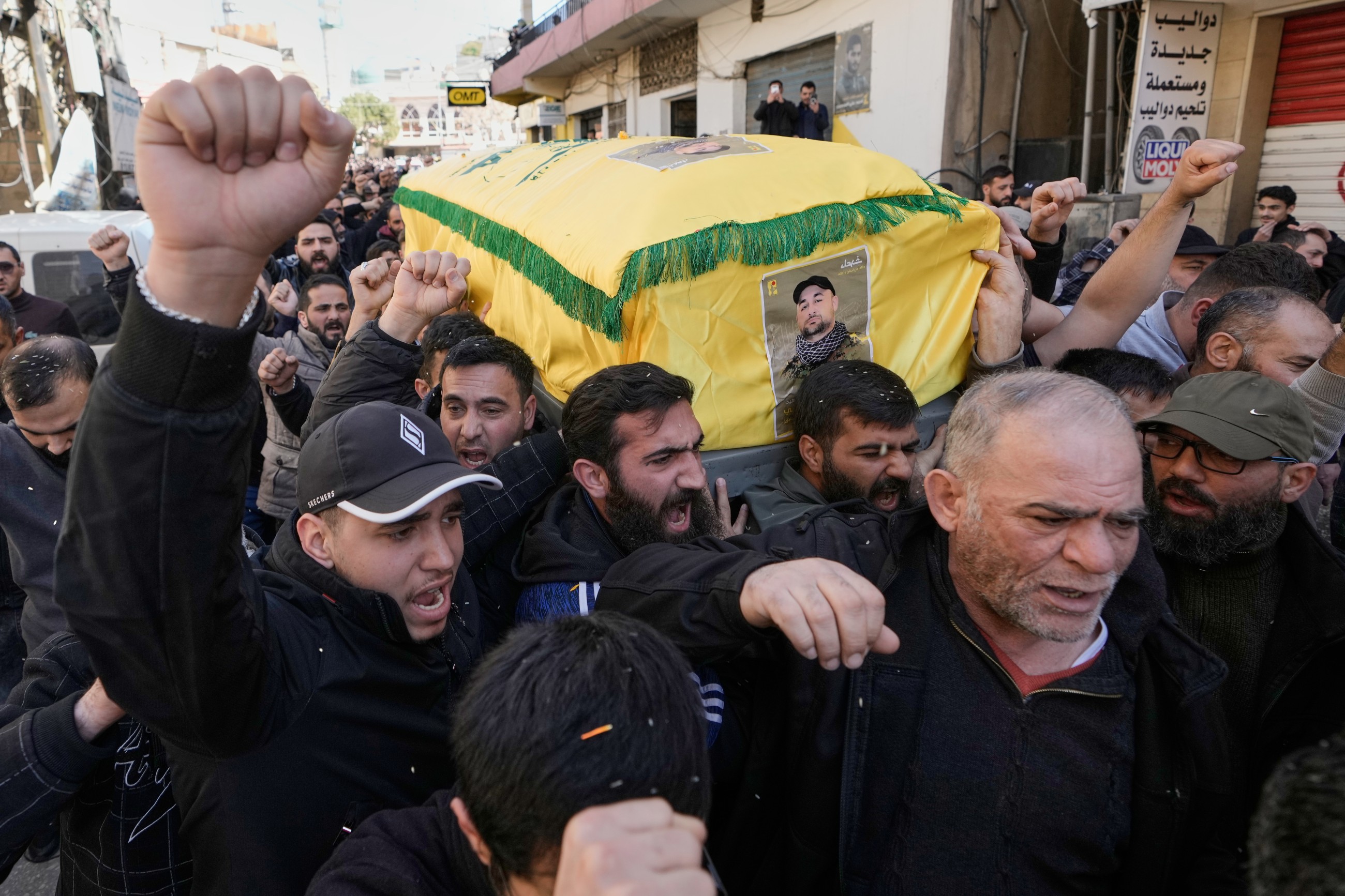
The strikes have caused a strong reaction within Lebanon. In the city of Baalbek, hundreds of people gathered for a mass funeral to honor the killed fighters. Supporters waved flags and chanted in favor of the group. Hezbollah official Mahmud Qamati described the event as a "massacre" and argued that the group has no other option but to fight. Hamas also issued a statement condemning the strike on the refugee camp. They claimed the building hit was used by a security force meant to keep the camp stable and that the attack harmed innocent people. Meanwhile, the Lebanese president condemned the strikes, even as his government tries to limit Hezbollah's military power.
What This Means Going Forward
The path toward peace in the region looks increasingly difficult. If Israel continues to target Hezbollah leaders and facilities, the group is likely to respond with its own attacks, creating a cycle of violence that is hard to break. This situation puts the Lebanese government in a very tough position. They are trying to convince the world that they can manage their own security, but they cannot easily disarm a group that feels it is under constant threat. International leaders will likely call for both sides to show restraint, but as long as the tensions between the US and Iran remain high, a local ceasefire in Lebanon may be hard to maintain.
Final Take
The latest military actions show that the conflict between Israel and Hezbollah is entering a more dangerous phase. While Israel aims to weaken the group's military strength, the resulting deaths often serve as a reason for more fighting. Without a broader diplomatic agreement that includes the major powers in the region, civilians in Lebanon will continue to face the dangers of a war that shows no signs of ending soon.
Frequently Asked Questions
Why did Israel launch these air strikes?
Israel stated that the strikes were necessary for self-defense. They targeted Hezbollah command centers used for missile operations and locations linked to Hamas to prevent future attacks against Israeli territory.
How many people were killed in the attacks?
According to the Lebanese health ministry, 12 people died in total. Hezbollah confirmed that eight of its members were among those killed during a meeting in the eastern part of the country.
What is the Lebanese government's plan for Hezbollah?
The Lebanese government wants to disarm Hezbollah so that the national army can take full control of security, especially in the south. However, the recent strikes make it harder to carry out this plan as the group vows to keep its weapons for protection.