.png)
Summary
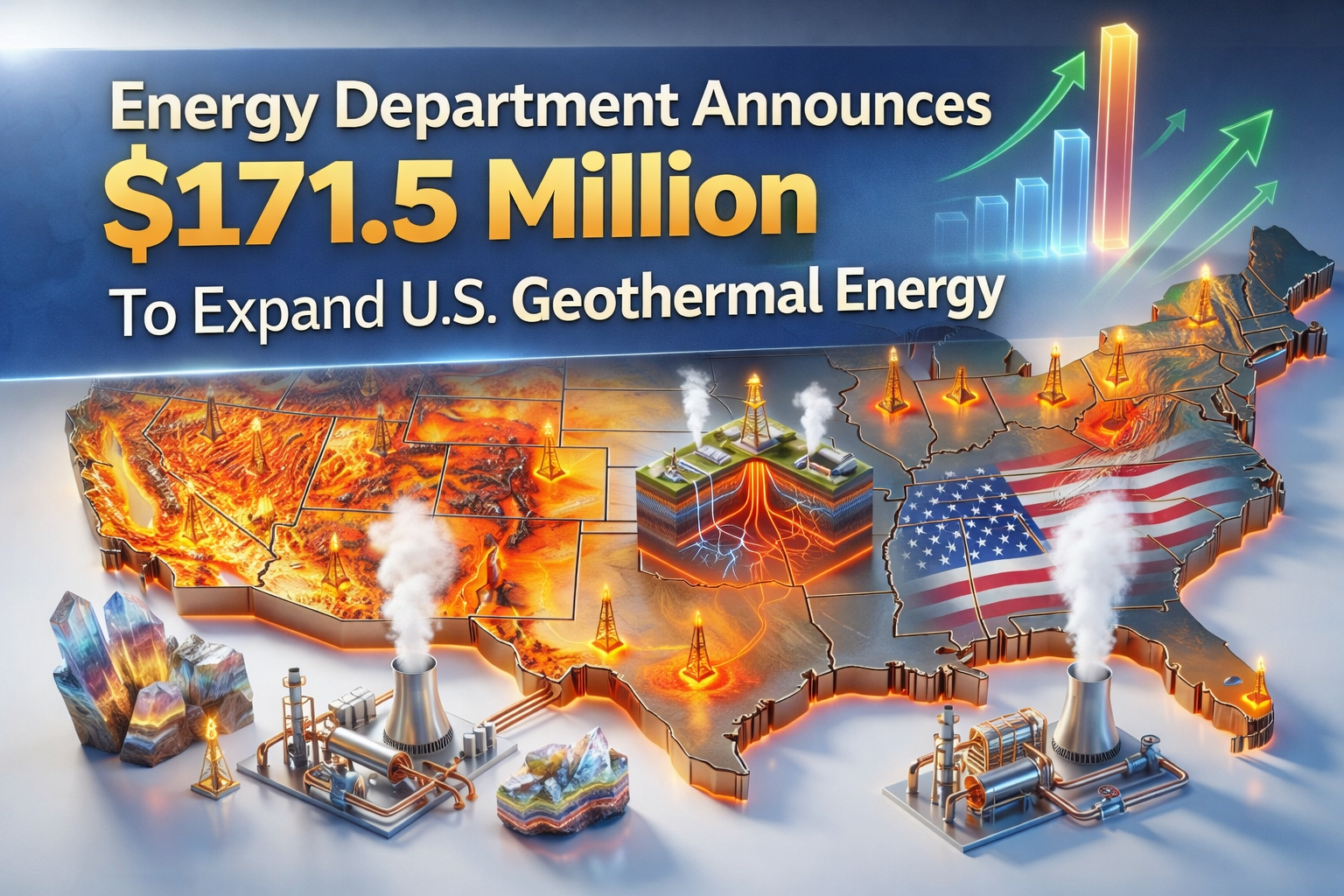
The U.S. Department of Energy (DOE) has announced a new investment of $171.5 million to grow the geothermal energy sector. This funding is meant to support large-scale tests of new technologies that can turn the Earth's natural heat into electricity. By proving these methods work in the real world, the government hopes to make clean, constant energy more available to everyone. This move is a key part of the national effort to create a more reliable power grid and reduce carbon emissions.
Main Impact
This major funding boost is designed to move geothermal technology from the testing phase into everyday use. While geothermal power has been around for a long time, it has mostly been used in very specific places where heat is close to the surface. This new money focuses on "next-generation" systems that can work in many more locations across the country. The biggest impact will be the ability to produce clean energy 24 hours a day, which helps solve the problem of power gaps when the sun is not shining or the wind is not blowing.
Key Details
What Happened
The Department of Energy opened a new funding opportunity that allows companies, researchers, and local governments to apply for financial support. The goal is to conduct "field-scale" tests. This means instead of just working in a small lab, these groups will build and run actual systems in the ground to see how they perform. These tests will help show if new drilling and heat-capture methods are safe, effective, and worth the cost for long-term use.
Important Numbers and Facts
The total amount of money being offered is $171.5 million. This is one of the largest recent investments in this specific type of energy. The DOE is looking for projects that can help with two main things: generating electricity and providing large-scale heating and cooling for buildings. By covering some of the high costs of drilling, the government is making it easier for private companies to try out new ideas that might otherwise be too risky or expensive.
| Feature | Traditional Geothermal | Next-Generation Geothermal |
|---|---|---|
| Location | Limited to specific areas with surface-level heat. | Deployable in many more locations nationwide. |
| Technology | Relies on naturally occurring steam or hot water. | Uses engineered systems to extract heat from deep rock. |
| Availability | Constant 24/7 power. | Constant 24/7 power with higher scalability. |
| Funding Focus | Established commercial projects. | $171.5M DOE investment for large-scale testing. |
| Grid Impact | Localized energy source. | Reliable, nationwide carbon emission reduction. |
Background and Context
Geothermal energy is simply heat that comes from inside the Earth. To get this energy, workers drill deep holes into the ground to reach hot rocks. They then pump water down into these holes. The water gets very hot and turns into steam, which is then brought back to the surface to turn a turbine. This turbine spins and creates electricity. It is a very clean process because it does not burn fuel or create smoke.
In the past, we could only do this in places with natural hot springs or volcanic activity, mostly in the Western United States. However, new technology called Enhanced Geothermal Systems (EGS) allows us to create these conditions almost anywhere. By drilling deeper and using advanced tools, we can reach the heat that exists everywhere under the Earth's crust. This $171.5 million investment is specifically aimed at making these advanced systems work better and cost less.
Public or Industry Reaction
Energy experts and environmental groups have reacted positively to this news. Many believe that geothermal is the "missing piece" of the clean energy puzzle because it provides a steady flow of power at all times. Industry leaders also point out that the skills needed for geothermal drilling are very similar to those used in the oil and gas industry. This means that workers who currently have jobs in fossil fuels can use their existing skills to work in the clean energy sector. This makes the shift to green energy better for the economy and for workers' job security.
What This Means Going Forward
In the coming months, the DOE will select the best projects to receive the funding. Once the projects are chosen, we will see new drilling sites and testing facilities pop up in different parts of the country. The data collected from these tests will be shared so that other companies can learn how to build better systems. If these tests are successful, it could lead to a massive increase in geothermal power plants over the next ten years. This would mean a cleaner environment and a more stable supply of electricity for homes and businesses.
Final Take
The $171.5 million investment is a clear sign that the government sees geothermal energy as a vital part of the future. By using the natural heat from the ground, the United States can produce clean power around the clock. This funding helps bridge the gap between a good idea and a working power plant. It is a practical step toward a future where our energy is both green and reliable.
Frequently Asked Questions
What is geothermal energy?
Geothermal energy is power made by using the natural heat from deep inside the Earth to create steam and turn electricity turbines.
Why is the government spending $171.5 million on this?
The money is used to help pay for expensive real-world tests. These tests show if new geothermal technologies are safe and can produce enough electricity to be useful.
How is geothermal different from solar or wind power?
Geothermal energy is constant. While solar needs the sun and wind needs the wind to blow, geothermal provides power 24 hours a day, regardless of the weather.